The number you report is the number you can prove

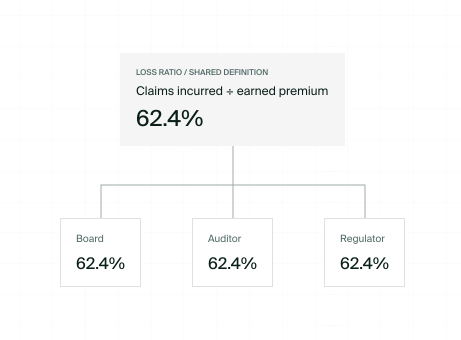
Board, regulatory, and audit reports can use different scopes and definitions. We make those differences explicit and trace each figure to its source, so every reported number can be explained and reconciled.

Lineage you can show, not describe

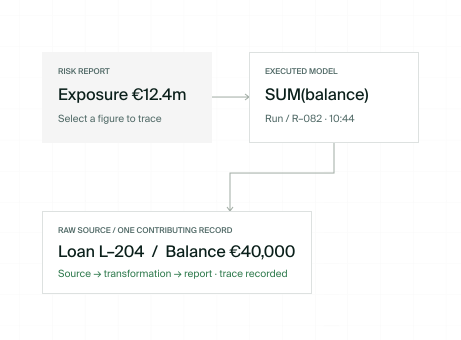
When regulators or supervisors ask how a figure was built, the answer depends on a person's memory rather than a verified record.
SOLUTION:
Capture lineage from the transformations and systems in scope, documenting manual adjustments and gaps that cannot be traced automatically.
RESULT:
Traceable paths from selected risk-reporting figures to their source data, with transformations, adjustments, and evidence available for review.
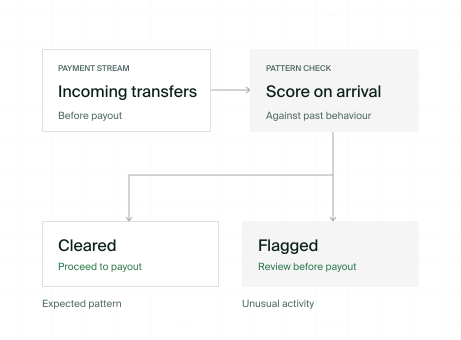
Data that reaches fraud checks before payment

Fraud only surfaces during the monthly review—long after the unauthorized payment has already cleared.
SOLUTION:
Deliver timely, reconciled transaction and claims data to agreed fraud rules or existing models, with freshness checks and routing into the review workflow.
RESULT:
Suspicious cases can reach the responsible team before payment where the process allows, with detection timing and case outcomes recorded.

Agreed definitions behind every reported metric

Key metrics like loss ratio, exposure, and arrears show different numbers depending on which department's report you open.
SOLUTION:
Define each metric with its reporting scope, timing, and calculation rules, and trace it back to the underlying records.
RESULT:
Reports that use consistent definitions where they should, with legitimate differences documented and reconciled.

When the decision cannot wait for the next refresh

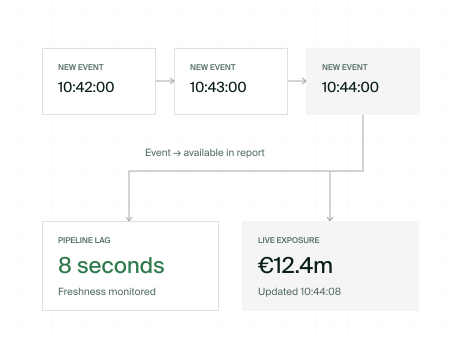
Critical operational decisions are made using static files that were accurate at two in the morning, leaving blind spots all day.
SOLUTION:
Transition data pipelines from nightly batch loads to real-time or streaming incremental updates with active freshness monitoring.
RESULT:
Exposure and case-status data delivered within agreed freshness targets, with pipeline lag and missed targets visible to the responsible team.

The DORA register as a data product

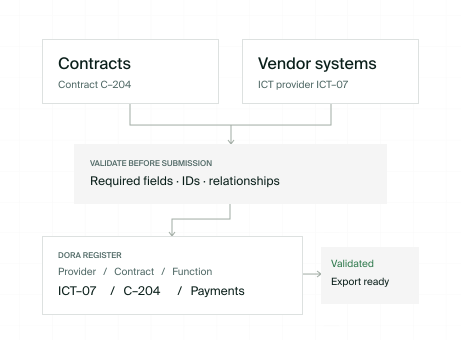
Contract, provider, and service information is spread across systems and spreadsheets, making the register difficult to maintain and validate.
SOLUTION:
Model the register directly from source contracts and vendor systems, running automated validation rules before submission.
RESULT:
A repeatable register-generation process with validation results and unresolved exceptions available for review before submission.